


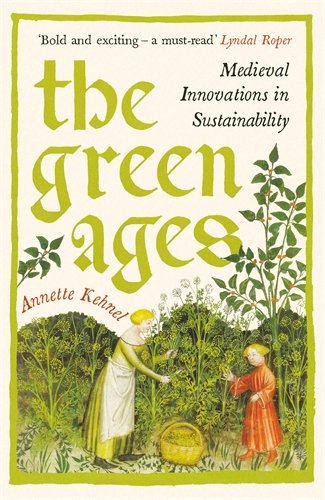
The Green Ages (Paperback)
Medieval Innovations in Sustainability
Buy from
A fascinating look at the medieval precedents for modern sustainable living
'Surprising and fascinating' GUARDIAN
'A treasure trove' PETER FRANKOPAN
'A book of great joy' TELEGRAPH
Medieval methods for modern living: a timeless study of the sustainability movement from the Middle Ages to today
Fishing quotas on Lake Constance. Common lands in the UK. The medieval answer to Depop in the middle of Frankfurt.
These are all just some of the sustainability initiatives from the Middle Ages that Annette Kehnel illuminates in her astounding new book, The Green Ages. From the mythical-sounding City of Ladies and their garden economy to early microcredit banks and rent-a-cow schemes, Kehnel uncovers a world at odds with what we might think of as the typical medieval existence.
Pre-modern history is full of inspiring examples and concepts that open up new horizons. And we urgently need them as today's challenges - finite resources, the twilight of consumerism, growing inequality - threaten what we have come to think of as a modern way of living sustainably.
This is a revelatory look at the past that has the power to change our future.
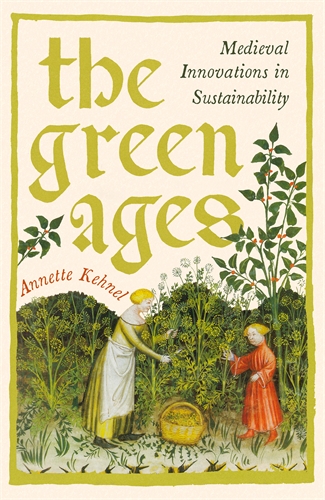
The Green Ages (Hardback)
Medieval Innovations in Sustainability
Buy from
A fascinating look at the medieval precedents for modern sustainable living
'Surprising and fascinating' GUARDIAN
'A treasure trove' PETER FRANKOPAN
'A book of great joy' TELEGRAPH
Medieval methods for modern living: a timeless study of the sustainability movement from the Middle Ages to today
Fishing quotas on Lake Constance. Common lands in the UK. The medieval answer to Depop in the middle of Frankfurt.
These are all just some of the sustainability initiatives from the Middle Ages that Annette Kehnel illuminates in her astounding new book, The Green Ages. From the mythical-sounding City of Ladies and their garden economy to early microcredit banks and rent-a-cow schemes, Kehnel uncovers a world at odds with what we might think of as the typical medieval existence.
Pre-modern history is full of inspiring examples and concepts that open up new horizons. And we urgently need them as today's challenges - finite resources, the twilight of consumerism, growing inequality - threaten what we have come to think of as a modern way of living sustainably.
This is a revelatory look at the past that has the power to change our future.
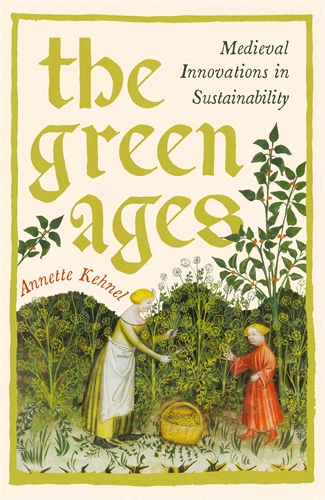
The Green Ages (Ebook)
Medieval Innovations in Sustainability
Buy from
A fascinating look at the medieval precedents for modern sustainable living
'Surprising and fascinating' GUARDIAN
'A treasure trove' PETER FRANKOPAN
'A book of great joy' TELEGRAPH
Medieval methods for modern living: a timeless study of the sustainability movement from the Middle Ages to today
Fishing quotas on Lake Constance. Common lands in the UK. The medieval answer to Depop in the middle of Frankfurt.
These are all just some of the sustainability initiatives from the Middle Ages that Annette Kehnel illuminates in her astounding new book, The Green Ages. From the mythical-sounding City of Ladies and their garden economy to early microcredit banks and rent-a-cow schemes, Kehnel uncovers a world at odds with what we might think of as the typical medieval existence.
Pre-modern history is full of inspiring examples and concepts that open up new horizons. And we urgently need them as today's challenges - finite resources, the twilight of consumerism, growing inequality - threaten what we have come to think of as a modern way of living sustainably.
This is a revelatory look at the past that has the power to change our future.
Reviews for The Green Ages
Guardian
Telegraph
Peter Frankopan, author of Silk Roads
Times Literary Supplement
History Today
Lyndal Roper, Regius Professor of History, Oriel College, Oxford
Frank Trentmann, author Empire of Things: How We Became a World of Consumers, from the Fifteenth Century to the Twenty-First
Harald Welzer, author and editor futurzwei magazine
Annie Gray, author The Bookshop, the Draper, the Candlestick Maker
Henrietta Leyser, author Medieval Women
Bernd Schneidmüller, Professor of Medieval History, Heidelberg University
Grace Blakeley, author Vulture Capitalism
Dipesh Chakrabarty, author The Climate of History in a Planetary Age and One Planet, Many Worlds
Library Journal
Annette Kehnel
Professor Annette Kehnel studied History and Biology at the University of Freiburg, Sommerville College, Oxford and LMU in Munich. She received her doctorate from Trinity College, Dublin for her research on Irish convent communities and taught at the TU Dresden, where she received her post-doctorate in 2004. Since 2005 she has held a chair in Medieval History at the University of Mannheim. She has published numerous works on her main topics of research: cultural and economic history and historical anthropology.