





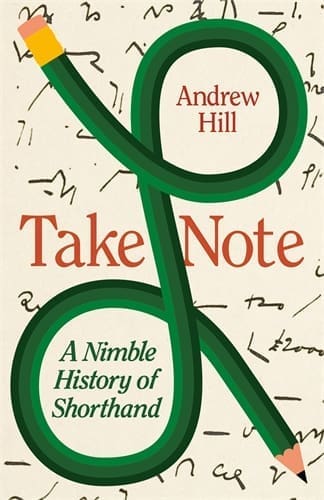
Take Note (Hardback)
A Nimble History of Shorthand
Preorder from
The lively and illuminating story of a vital tool that has powered the working world
'Reveals fascinating truths about history - my favourite kind of book' SATHNAM SANGHERA
'A delightful and moving account of our efforts to capture the truth as it speeds by' TIM HARFORD
A secret script? A memory-boosting tool? What exactly is shorthand?
Cicero's scribe invented it. Samuel Pepys, Charles Dickens and even Astrid Lindgren used it. Rivalries, adulteries and actual martyrdoms arose from it. Spycraft was reliant on it, courtroom dramas were changed by it, and feminism has an uneasy debt to it. But today, its continuing existence is at risk. So, what exactly is shorthand? What has it given us? And what would we lose if this world-changing technology disappeared?
Andrew Hill follows the story from the scribes of Ancient Rome to today's takeover of AI, revealing how a system of symbols invented to speedily transcribe speech shaped the modern world and can still offer a valuable way to record, store and recall our brightest ideas today.
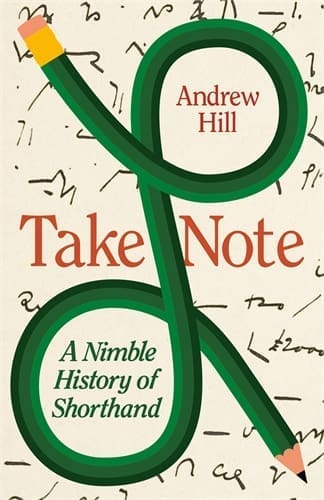
Take Note (Ebook)
A Nimble History of Shorthand
Preorder from
The lively and illuminating story of a vital tool that has powered the working world
'Reveals fascinating truths about history - my favourite kind of book' SATHNAM SANGHERA
'A delightful and moving account of our efforts to capture the truth as it speeds by' TIM HARFORD
A secret script? A memory-boosting tool? What exactly is shorthand?
Cicero's scribe invented it. Samuel Pepys, Charles Dickens and even Astrid Lindgren used it. Rivalries, adulteries and actual martyrdoms arose from it. Spycraft was reliant on it, courtroom dramas were changed by it, and feminism has an uneasy debt to it. But today, its continuing existence is at risk. So, what exactly is shorthand? What has it given us? And what would we lose if this world-changing technology disappeared?
Andrew Hill follows the story from the scribes of Ancient Rome to today's takeover of AI, revealing how a system of symbols invented to speedily transcribe speech shaped the modern world and can still offer a valuable way to record, store and recall our brightest ideas today.
Reviews for Take Note
Sathnam Sanghera, author of Empireland
Rebecca Lee, author Rogues, Widows and Orphans
Tim Harford, author of How To Make The World Add Up
David Bodanis, author of E=mc2
Gillian Tett, author of Fool’s Gold
What to Read in 2026 Financial Times
Lucy Kellaway OBE, author of In Office Hours and founder of Now Teach
Sir Richard Lambert, former chair of Bloomsbury and the British Museum
Andrew Hill
Andrew Hill is an award-winning journalist, writer and public speaker. A senior writer at the Financial Times, he is the author of Leadership in the Headlines and prize-winning Ruskinland. Over a thirty-year career, Andrew has used shorthand to report from around the world; his top speed was once an impressive 130 words per minute.